

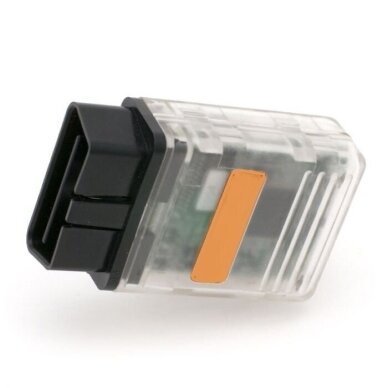
Fault code eraser for Renault Master III / Opel Movano B / Nissan NV400 (Interstar II)
140 €Aproximate delivery time: 3 - 5 w. d.IN STOCK
Ready for dispatch within 24 hours
Leasing calculators- ml
-
This device erases fault codes and removes power or speed limitations. It clears inactive fault codes in all vehicle systems (control units), using the same procedures as authorised service centres.
After the fault codes are erased, the following disappear from the dashboard
- engine power reduction warning
- speed limit warning (20 km/h)
- steady or flashing check engine light
- steady or flashing SCR symbol
Functions
- erasing inactive fault codes in all systems
- removing temporary power or speed limitations
How to use
- Switch the ignition on.
- Plug the device into the diagnostic socket (OBD).
- The device starts erasing faults (the blue indicator pulses).
- The green indicator shows that the process is complete.
- Switch the ignition off and unplug the device.
If a fault or error is detected during erasing, the indicator lights up red. This means the process was interrupted and the faults were not erased.
Key benefits
- works like a diagnostic tester and erases faults in the same way
- erasing takes only a few dozen seconds
- no need to drive to a service centre to clear faults
- faults can be erased on the road
Compatible vehicles
- Renault: Master III
- Opel: Movano B
- Vauxhall: Movano B
- Nissan: NV400 (Interstar II)
Technical specifications
Connector standard OBD plug Supply voltage 6-24 V Dimensions (length × width × thickness) 7 × 4 × 2.5 cm Weight 40 g Vehicle type light commercial vehicles (LCV) Important information about function availability
Attention – not all functions mentioned in the product description may be available for your car, truck, or motorcycle.
The scope of diagnostic and other functions depends on the vehicle manufacturer, model, year of manufacture, configuration, control unit versions, and many other technical factors.We recommend verifying compatibility with your specific vehicle before purchase.
